Mexican Style Pulled Pork Carnitas Recipe
As an Amazon Associate we earn from qualifying purchases. Product links on this page may be affiliate links.
If you already smoke pork shoulder, you are most of the way to carnitas. Same cut, same patience, different finish — and the difference in that finish is the whole point.
This is carnitas explained for people who cook barbecue: what separates it from pulled pork, how to make it on a grill or smoker rather than a stovetop, and where the two techniques borrow from each other.
Table of Contents
Is carnitas the same as pulled pork?
No — and the difference is not the meat.
Both start from the same cut: pork shoulder, Boston butt. Both are cooked long and slow until the connective tissue gives up. What separates them is the cooking medium and the finish.
| Pulled pork | Carnitas | |
|---|---|---|
| Method | Smoked in dry heat | Simmered in fat (confit) |
| Seasoning | Rub: salt, sugar, paprika, pepper | Citrus, bay, cumin, oregano, sometimes milk |
| Finish | Pulled soft, sauced | Pulled, then crisped in its own fat |
| Texture | Uniformly tender and moist | Tender inside, crisp edges |
| Smoke | Central to the dish | Traditionally absent |
The short answer: pulled pork is smoked and stays soft. Carnitas are braised in fat and then crisped. That crisping step is what people are actually tasting when they say carnitas taste different.
Can you make carnitas from pulled pork?
Yes, and it is a genuinely good use for leftovers — though it is a shortcut rather than the real thing.
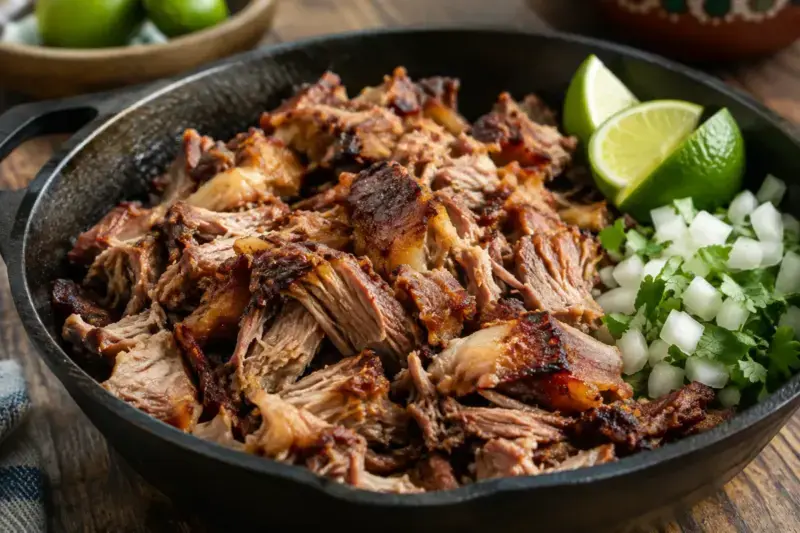
Take cooked pulled pork, spread it in a hot pan or a cast-iron skillet with a spoonful of lard or its own rendered fat, and leave it alone until the underside browns and crisps. Then turn it once. Squeeze lime over it off the heat.
What you get is smoky carnitas — not traditional, because the smoke is still there and the citrus braise never happened, but very good in a taco. Plenty of barbecue cooks make this deliberately rather than as a rescue.
The mistake is stirring. Crisping needs contact time against hot metal; constant movement just heats the meat through.
Best meat for carnitas
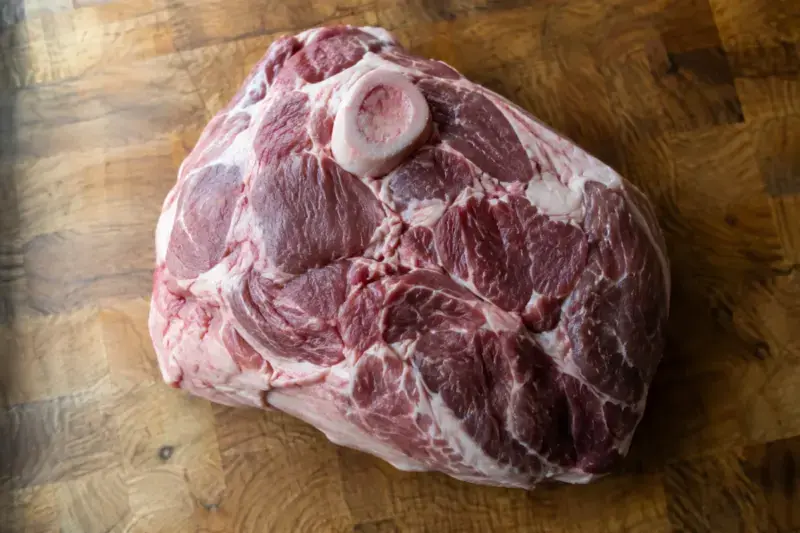
Pork shoulder, bone-in, with the fat cap on. Boston butt is ideal — it has the intramuscular fat and connective tissue the long cook needs.
- Bone-in over boneless — more flavour and it holds shape better during a long cook.
- Do not trim the fat cap hard. In carnitas the fat is the cooking medium, not something to remove.
- Avoid loin or leg. Too lean; they go stringy rather than tender.
If you are buying a whole shoulder, it helps to know how the cuts break down — the money muscle is worth separating and treating differently even here.
Carnitas on a grill or smoker
This is where a barbecue setup earns its place. The traditional method is a copper pot of simmering lard; the grill version keeps the principle and adds control.
The setup
- Cut the shoulder into fist-sized chunks. More surface area means more crisp edges later — this is not a whole-butt cook.
- Season simply: salt, and then citrus, bay, cumin and oregano. Orange and lime, cut in halves and thrown in whole, are traditional.
- Into a Dutch oven or a foil pan with enough lard to come part-way up the meat. It does not need to be submerged.
- Indirect heat at 275–300 °F (135–150 °C), lid on, for three to four hours — until a fork twists in the meat with no resistance.
- Then crisp. Lift the chunks out, shred coarsely, spread on a tray and put it back over direct heat for a few minutes until the edges catch.
That last step is non-negotiable. Skipping it gives you braised pork, not carnitas.
On smoke
Traditional carnitas have none. But if you are cooking on a smoker anyway, a light wood — apple or cherry — during the braise gives a hybrid that works well in a taco even if a purist would object. Heavy woods like mesquite overwhelm the citrus.
Either choice is defensible. What is not defensible is smoking it hard and still calling it traditional.
Why carnitas suit a cookout
Two practical advantages over pulled pork for feeding a crowd outdoors:
- They reheat better. The fat protects the meat, and the crisping step can be repeated — it actually improves on a second pass.
- The braise is forgiving of timing. An extra half-hour in the pot does very little harm. An extra half-hour on a smoker at 250 °F does.
You can braise the day before, refrigerate in the fat, and crisp to order as people eat. That is far easier hosting than trying to time a brisket.
What to serve them with
Warm corn tortillas, white onion and coriander chopped together, lime, and a salsa with enough acid to cut the fat. Nothing more is needed, and most additions get in the way.
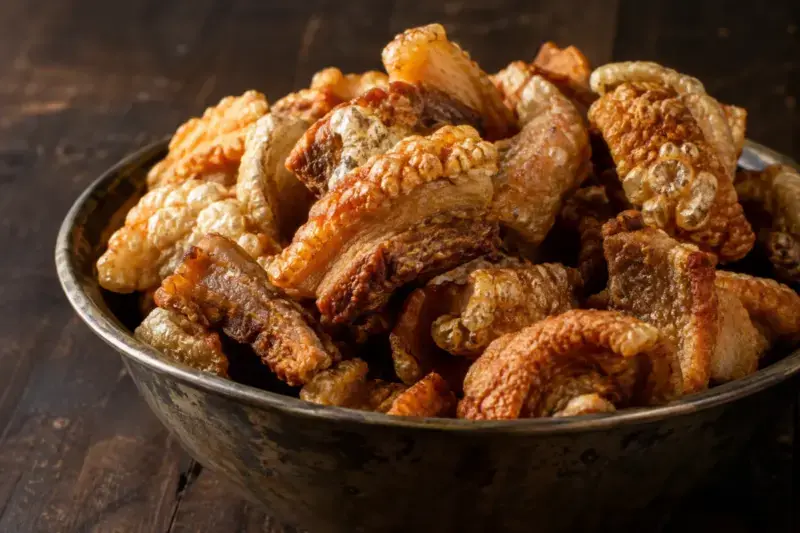
The rendered fat left in the pot is lard — strain it and keep it. It is the best thing you will ever fry a potato in, and it is also what you want for a second batch or for cracklings.
Equipment
Nothing exotic. A heavy pot that tolerates a live fire, and a way to know when the meat is genuinely done rather than merely hot — a reliable thermometer matters less here than with brisket, but the fork test is easier to read when you can confirm it. A cast-iron Dutch oven handles both the braise and the crisping stage without changing vessels.
More on equipment in our gear guide.
Last reviewed 14 September 2026.
If you want to know other articles similar to Mexican Style Pulled Pork Carnitas Recipe you can visit the category Pork Recipes.
More embers