Understanding the Money Muscle and Other Pork Butt Cuts
As an Amazon Associate we earn from qualifying purchases. Product links on this page may be affiliate links.
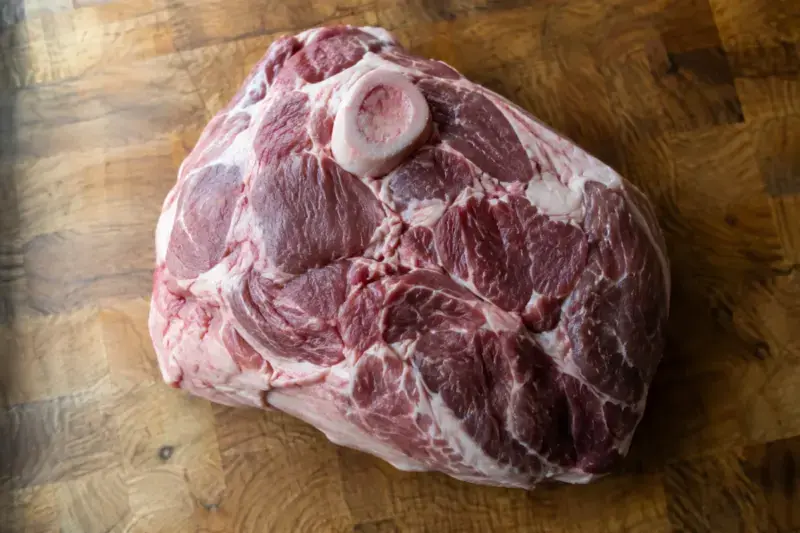
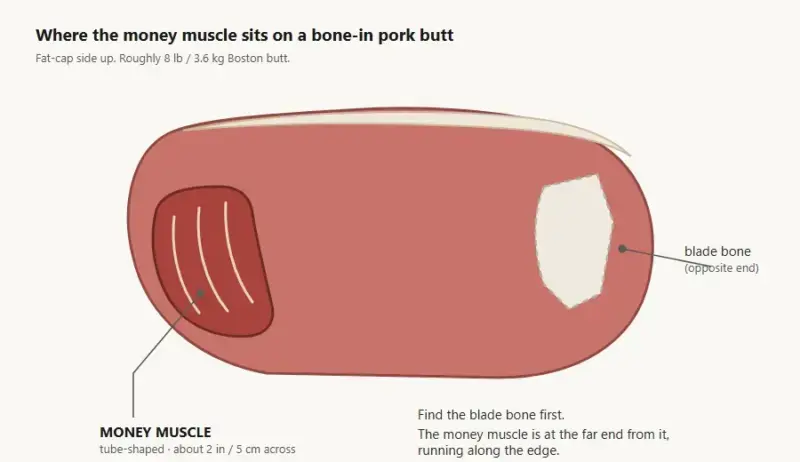
The money muscle is the tube-shaped muscle at the end of a pork butt
farthest from the blade bone, running along the edge of the cut. It is
roughly two inches across, and on a bone-in butt you can usually find it before you
even unwrap the meat: locate the blade bone, then go to the opposite end.
It gets the name because competition teams slice it and put it in the turn-in box:
it is the most marbled, most tender part of an otherwise hard-working shoulder, and
it is what a judge tastes first. That marbling is unusual for pork, which is why the
cut is prized rather than simply convenient.
The rest of this page covers how to separate it, why it finishes cooking before
the rest of the butt, how to slice it for a box, and what the other sections of a
pork butt are for.
Table of Contents
- What is the money muscle?
- How to identify the money muscle
- Money muscle location on the pork shoulder
- Why is it called the money muscle?
- Money muscle recipes and cooking techniques
- Comparing the money muscle to other pork cuts
- Tips for selecting the perfect pork butt
- How to separate the money muscle
- Why the money muscle finishes before the rest of the butt
- Slicing and presenting for the turn-in box
- Mistakes that cost people the cut
- Injection: what competition teams add
- Final thoughts on the money muscle
What is the money muscle?
The money muscle is the name given to a specific cut of meat located in the pork shoulder, or pork butt, known for its tenderness and rich flavor. This prized section is situated near the top of the shoulder and is particularly sought after due to its marbling of fat, which renders beautifully during cooking, resulting in a juicy and flavorful bite.
This cut is often considered the star of the pork butt, as it is less exercised than other parts of the shoulder, leading to its tender texture. The term "money muscle" reflects its ability to win competitions and accolades in barbecue contests, making it a valuable cut for chefs and home cooks alike.
How to identify the money muscle
Identifying the money muscle can be challenging, especially if you're working with a cryovac packaged pork butt. Here are some tips to help you locate it:
- Feel for the bone: Start by locating the bone in the shoulder. The money muscle is on the opposite side, making it easier to identify.
- Check for firmness: Once you locate the money muscle, it should feel firm and run across the surface of the pork butt. A good quality cut will have a consistent shape.
- Examine the marbling: Look for visible fat marbling within the cut, as this will ensure a moist and flavorful result after cooking.
Money muscle location on the pork shoulder
The money muscle is specifically located high on the pork shoulder, adjacent to the loin. To better understand its placement, it is helpful to visualize the anatomy of the pork shoulder:
| Cut | Location |
|---|---|
| Money Muscle | Top of the pork shoulder, near the loin. |
| Blade Meat | Around the blade bone, absorbs flavor during cooking. |
| Tubes | Small muscles located just behind the money muscle, equally tender. |
Why is it called the money muscle?
The term "money muscle" is tied to the meat’s ability to win competitions, as this part of the pork butt consistently delivers a high-quality flavor and tenderness. Pitmasters often use this cut in competitions because it can be the key to securing a victory. Thus, it’s a cut that can literally "make money" for those in the barbecue business.
Money muscle recipes and cooking techniques
When it comes to preparing the money muscle, there are several methods that can enhance its flavor and tenderness. Here are some popular techniques:
- Low and Slow: Cooking the money muscle at a low temperature for an extended period allows the fat to render and the meat to become tender, exactly as in a full smoked pork butt cook.
- Smoking: Using wood chips or chunks during smoking adds a depth of flavor that complements the natural taste of the pork.
- Injection: Some cooks choose to inject the meat with marinade or brine to enhance moisture and flavor profiles.
Regardless of the method, it’s crucial to monitor internal temperatures to ensure perfect doneness. The ideal target temperature for pork is around 195°F to 205°F for maximum tenderness.
Comparing the money muscle to other pork cuts
While the money muscle is a standout, it’s essential to know how it compares with other cuts of pork:
- Pork Collar: Also known as coppa, this cut is similar in tenderness but differs in flavor and texture.
- Blade Meat: Located around the shoulder bone, it’s another tender option that absorbs flavors well.
- Boston Butt: This larger cut includes the money muscle but offers various textures across its surface.
Tips for selecting the perfect pork butt
When searching for the best pork butt to utilize the money muscle, here are some tips for selection:
- Look for marbling: A good amount of fat throughout the cut ensures flavor and moisture.
- Check for color: The meat should be a bright pink or red, indicating freshness.
- Weight matters: Heavier cuts often have more fat and muscle, which contribute to better texture and flavor.
How to separate the money muscle
Identifying it is one thing; getting it off the butt cleanly is another, and this is where most people either ruin the cut or leave half of it behind.
The muscle is tube shaped and runs in a horizontal line under the pork butt, on the end opposite the bone. Look along it and you will see evenly spaced bands of fat running through striated meat — that banding is the giveaway, and it is what makes the cooked medallions look the way they do.
The sequence
- Trim the fat cap back about an inch and a half where it meets the muscle. This is what frees the money muscle from the rest of the butt without cutting into it.
- Separate with your fingers first. Work them into the seam and break the connective tissue by hand. Fingers follow the natural seam; a knife cuts through it.
- Then use a boning knife to remove the membrane that connected the muscles.
That last step does two jobs. It exposes more surface for rub to stick to, and it means you are not peeling cooked membrane off the muscle right before turn-in — which is exactly when you least want to be handling it.
A flexible boning knife makes this considerably easier than a chef's knife; the flex is what lets you follow the seam rather than cut across it.
Why the money muscle finishes before the rest of the butt
This is the single most useful thing to know about this cut, and the reason people who cook a butt whole rarely get the money muscle right.
It cooks faster than the rest of the shoulder. The working target numbers are:
- Money muscle — around 180 °F
- Rest of the butt — around 195 °F
That fifteen-degree gap is the whole problem. Cook the butt until the shoulder is ready to pull and the money muscle has spent an extra stretch of time past its window — it goes from tender to dry and stringy, losing exactly the texture it is prized for.
Which is why competition teams separate it before cooking rather than after. You cannot pull one part of a whole butt off the smoker.
You need a reliable instant-read thermometer to work these margins — a fifteen-degree difference is inside the error range of most built-in lid gauges. Our thermometer guides cover what to look for.
Slicing and presenting for the turn-in box
Once the muscle is done, its log shape is what makes the presentation work: sliced across, it gives you medallions with the fat banding showing as concentric marbling in each slice.
In a competition box, those medallions go in first — arranged symmetrically, clean-cut edges facing out — and the pulled pork is built around them. Judges see the money muscle before they see anything else on the box, which is the entire reason the cut carries that name.
A practical detail worth stealing even if you never compete: wrapping the finished money muscle in foil and bundling it tightly inside the rest of the meat keeps it warm in the cooler without continuing to cook it.
Mistakes that cost people the cut
- Cooking the butt whole and hoping. The money muscle is done fifteen degrees before the rest. Whole-butt cooking sacrifices it, and no resting technique brings it back.
- Cutting the seam instead of finding it. A knife straight in takes meat from both sides. Fingers first, knife second.
- Leaving the membrane on. Less rub adheres, and you end up peeling it off cooked — usually taking surface meat with it.
- Slicing too thin. Thin medallions fall apart and lose the fat banding that makes them look the way they do.
- Trusting the lid thermometer. It reads air near the lid, not the temperature inside a specific muscle. On a fifteen-degree margin, that is not close enough.
Injection: what competition teams add
Most competition pork is injected before it goes on the smoker — it is one of the reasons contest pork tastes different from backyard pork. Injection carries salt, sugar and flavour into the interior of the muscle rather than leaving it all on the bark.
If you want to try it, a meat injector with a wide-bore needle handles thicker mixtures without clogging, which is the usual frustration with cheap ones.
Final thoughts on the money muscle
The money muscle is not just a cut of meat; it represents a skillful approach to barbecue that can result in mouthwatering dishes that impress judges and guests alike. By understanding how to identify, prepare, and utilize this cut, you can elevate your cooking game and enjoy the fruits of your labor.
So the next time you’re at the butcher or grocery store, remember the money muscle and its potential to transform your pork dishes into something extraordinary.
Last reviewed 14 September 2026.
If you want to know other articles similar to Understanding the Money Muscle and Other Pork Butt Cuts you can visit the category Pork Recipes.
More embers